

The story
Context
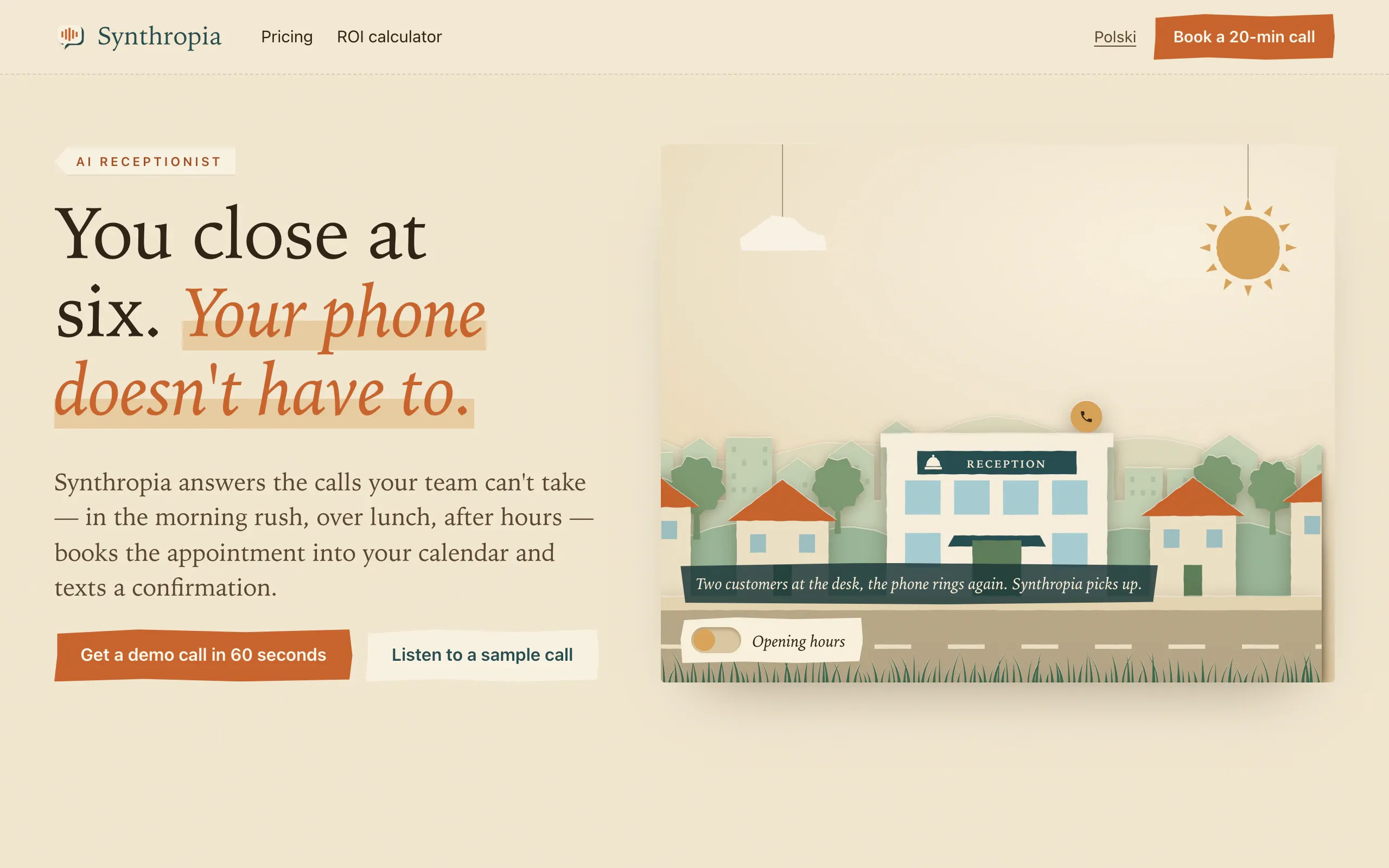
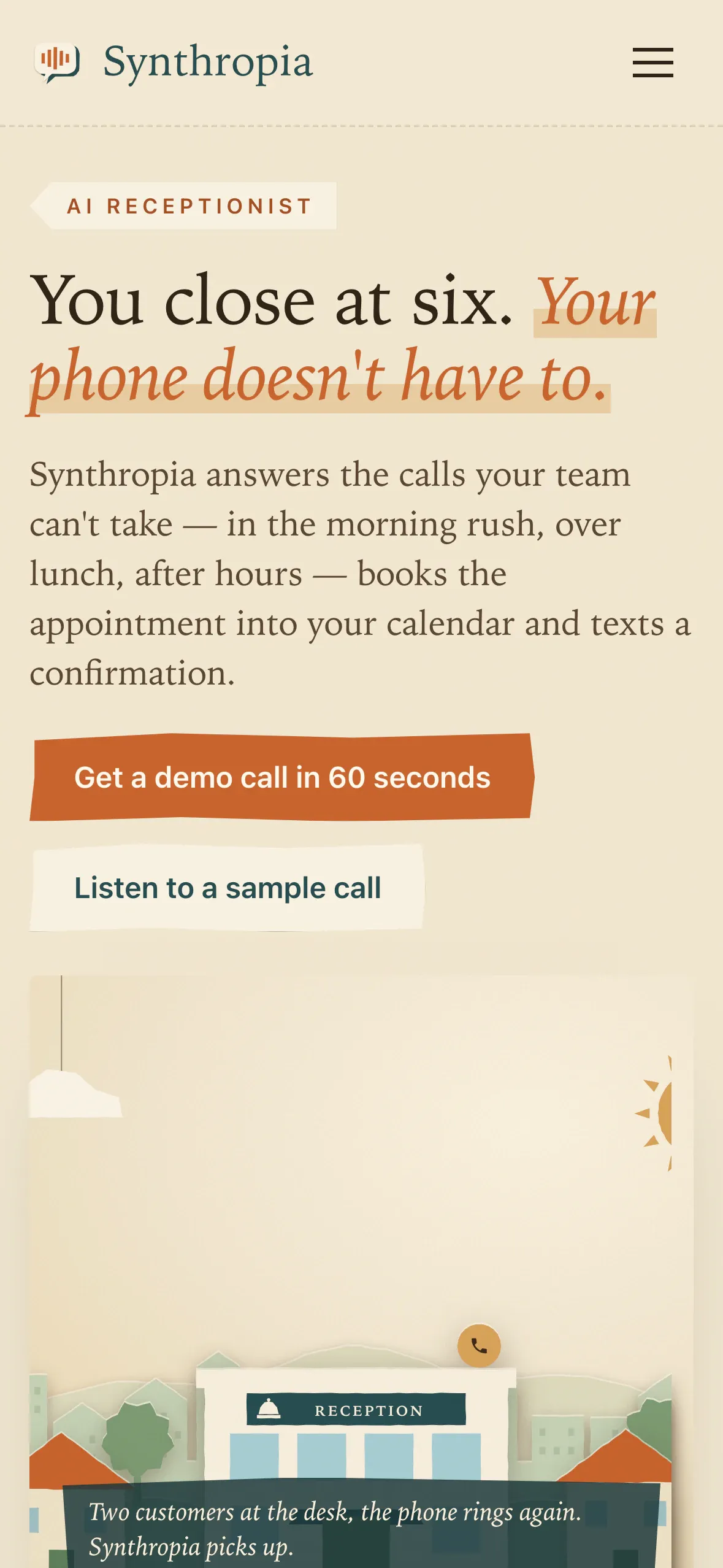
Service businesses such as medical clinics, law firms, and automotive repair shops depend directly on inbound phone inquiries for new revenue. However, peak calling periods coincide with busy reception desks, client consultations, or after-hours closures. Callers who reach a busy tone or voicemail rarely leave a message; the majority hang up and phone the next competing listing. Synthropia was designed to capture these lost opportunities through an autonomous AI voice receptionist.
The goal
The client required an automated voice agent that small and medium-sized businesses could adopt within days, avoiding PBX replacements, new phone numbers, or lengthy staff training. Participating businesses configure conditional call forwarding (on busy line, no answer, or outside office hours), directing unhandled calls to the AI assistant. From the outset, the platform was engineered to serve two markets simultaneously: Synthropia for international clients and AI Sekretarka in Poland.
Key decisions
Caller transparency. The voice agent introduces itself clearly as a digital assistant. Callers prioritize quick problem resolution and instant booking; straightforward disclosure establishes trust and avoids deceptive uncanny-valley interactions.
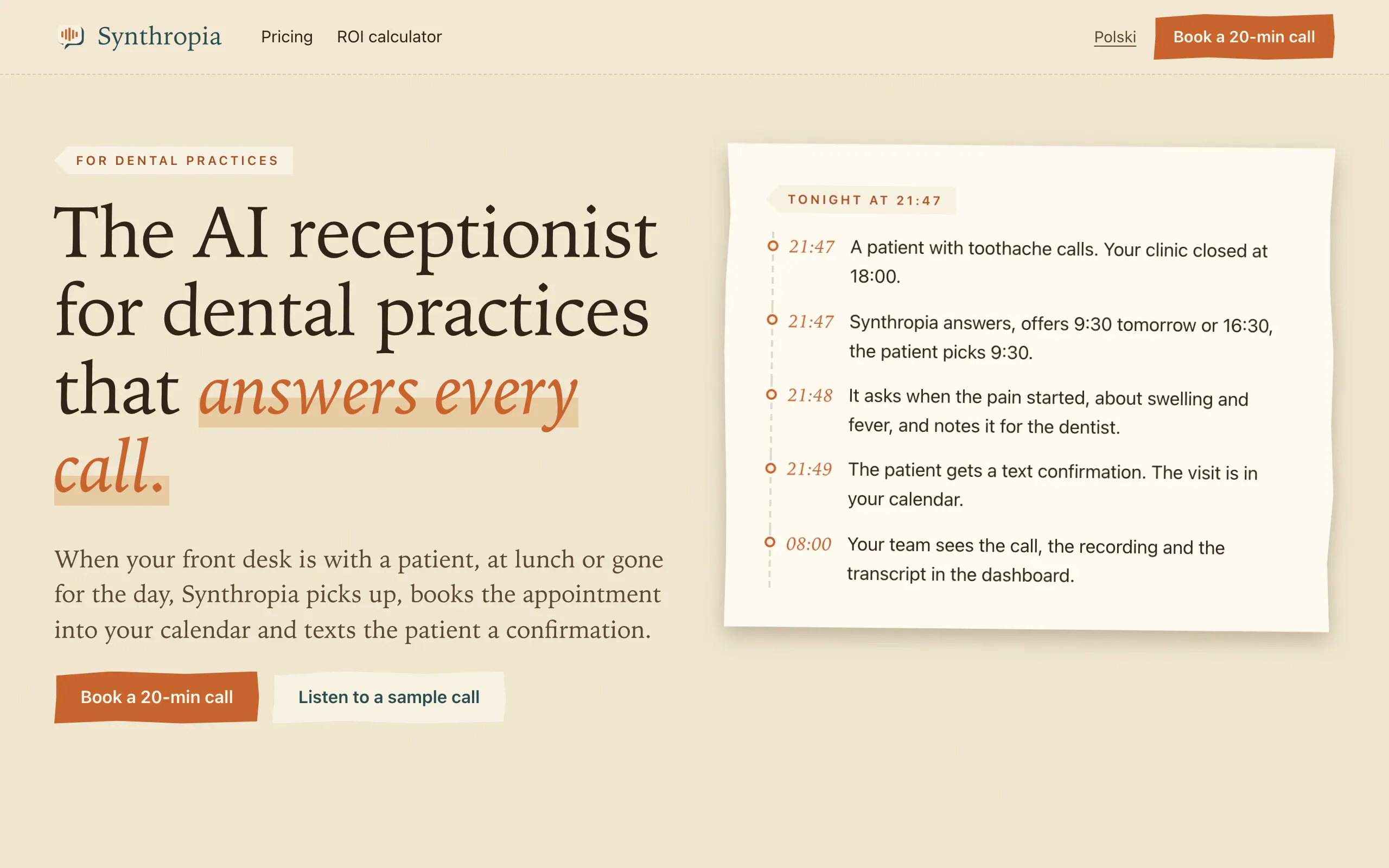
Live calendar synchronization. The assistant operates strictly against real-time data from the company’s calendar. During a call, it offers verified open slots, reserves the requested time immediately, and triggers an automated SMS confirmation. Rescheduling and cancellations follow the same synchronized workflow.
Deterministic escalation and structured hand-offs. Businesses define strict criteria for sensitive conversations. In complex scenarios, billing disputes, or upon caller request, the agent immediately transfers the call to a designated staff member or records a structured callback ticket with caller identity, summary, and priority.
Comprehensive dashboard analytics. Every call is recorded, transcribed, and categorized by intent (such as scheduling, cancellation, or pricing inquiry). Practice managers gain full operational visibility into call performance and customer inquiries without manually reviewing audio logs.
Engineering and latency architecture
The defining technical challenge in telephony voice agents is response latency. Natural phone conversations demand responses within 800 to 1,000 milliseconds; longer pauses create awkward silences or cause speakers to talk over one another.
We optimized the system across three core layers:
- Telephony and audio streaming: By coupling SIP trunks directly with WebRTC audio streams, we achieved low-overhead, bi-directional sound transmission.
- Streaming voice pipeline: Streaming Speech-to-Text (STT) transcribes the caller’s utterance in real time. A fine-tuned Large Language Model (LLM) generates tokens concurrently, piping partial text to a low-latency Text-to-Speech (TTS) synthesizer before the full response is completed.
- Voice Activity Detection (VAD) for barge-in: Client-side and edge-level VAD allows callers to interrupt the assistant naturally. The moment incoming voice is detected, playback terminates instantly and the pipeline resets for the caller’s new input.
In production, the system handles English and Polish with native fluency. Additional real-world call trials confirmed consistent dialogue performance across German, Spanish, Ukrainian, Portuguese, Cantonese, and Mandarin.
Outcome
Synthropia manages inbound call traffic across dozens of active businesses, capturing leads and appointments that previously slipped through missed calls and after-hours bottlenecks. Standard customer onboarding takes only a few business days, consisting of a short configuration setup, calendar integration, and carrier-level conditional forwarding.
What’s next
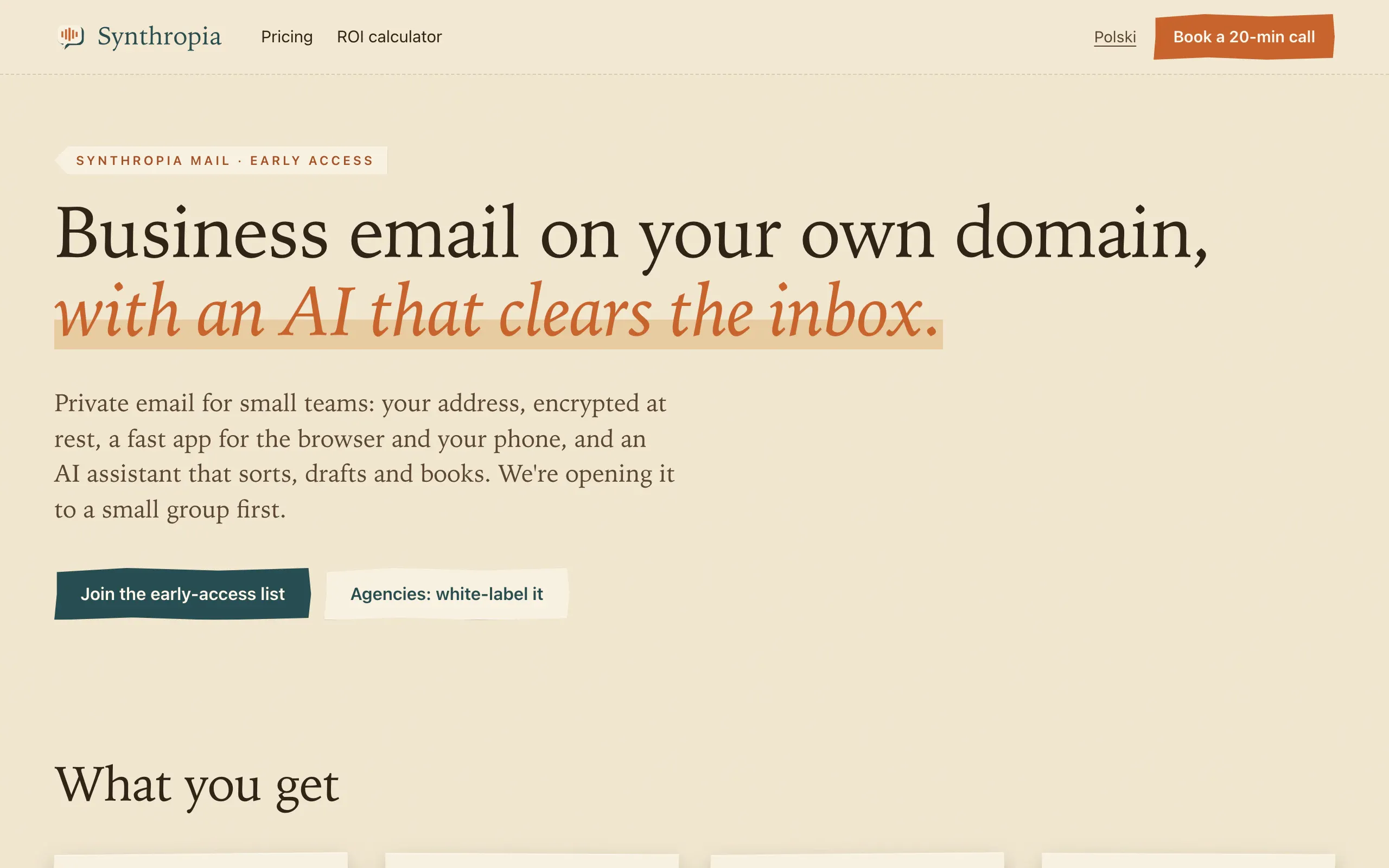
Leveraging the core infrastructure, the team is deploying an AI-powered business inbox module. This assistant categorizes incoming correspondence, drafts context-aware replies from company documentation, and books appointments directly from email threads. If you want to automate customer communications or deploy real-time voice agents, explore our work in AI integration and backend systems and integrations.