




The story
Context
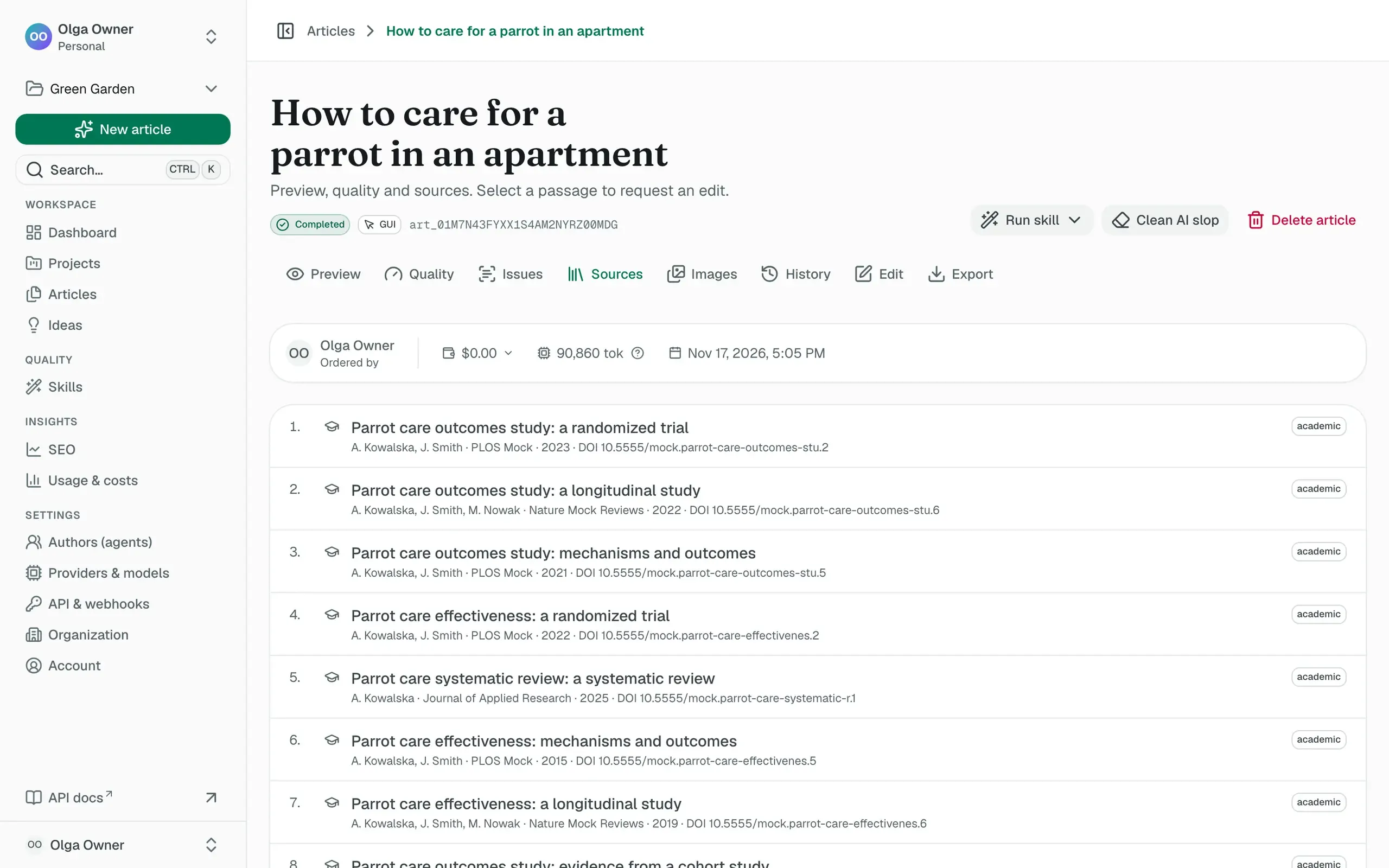
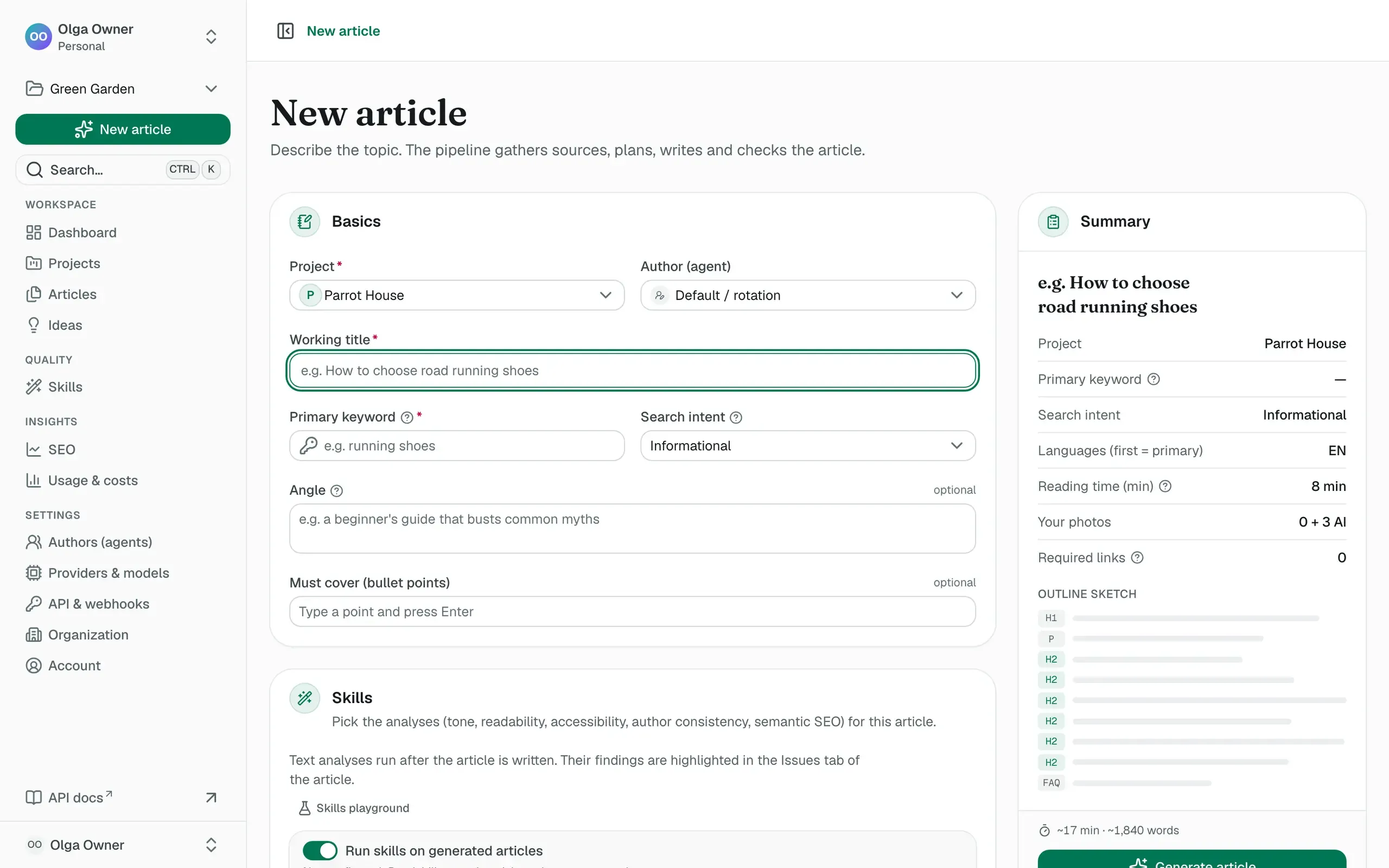
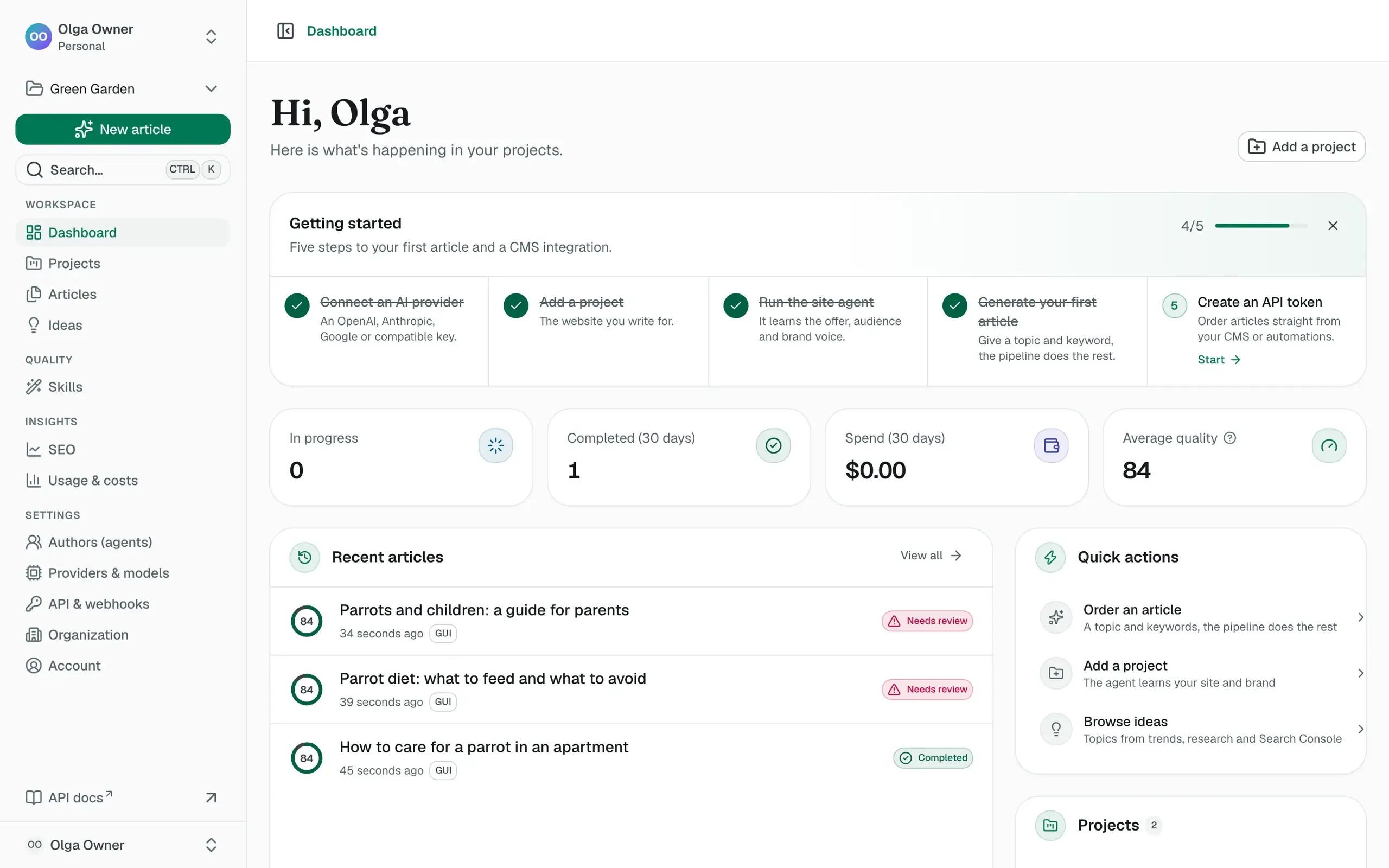
Pennao transforms target keywords and editorial prompts into comprehensive, research-backed SEO articles. Rather than generating ungrounded text from generative model parameters, the platform crawls academic repositories and trusted domain registries, scores literature credibility, constructs structured outlines, and attributes source citations to precise claims. Published articles can be exported in Markdown, HTML, or JSON formats, complete with Open Graph metadata and Schema.org (JSON-LD) structured data. We also engineered the platform’s public product website, pennao.com.
The goal
Automated content generation typically suffers from two critical defects: factual hallucinations and formulaic, repetitive phrasing (AI slop). Pennao was conceived to deliver content that human editors can audit sentence by sentence against verifiable academic citations.
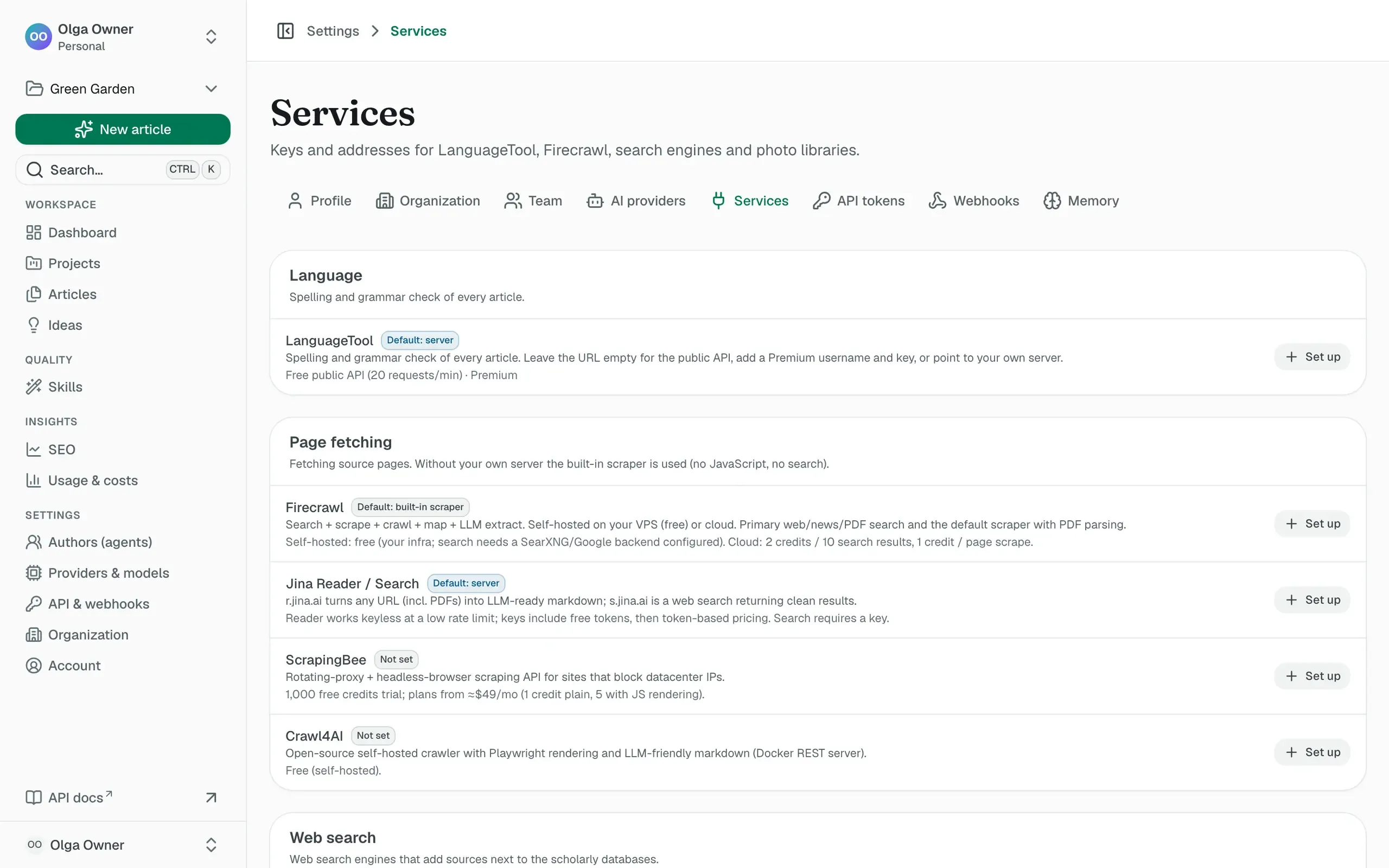
The secondary architectural mandate was cost sovereignty via a Bring Your Own Key (BYOK) model. The platform operator charges no markup on AI inference tokens: each organization connects its own API keys and settles usage directly with model providers.
Core capabilities
- Precise citation attribution. Every factual assertion and empirical figure links directly to an academic paper or authoritative document. Each source receives an algorithmic credibility score from 0 to 100.
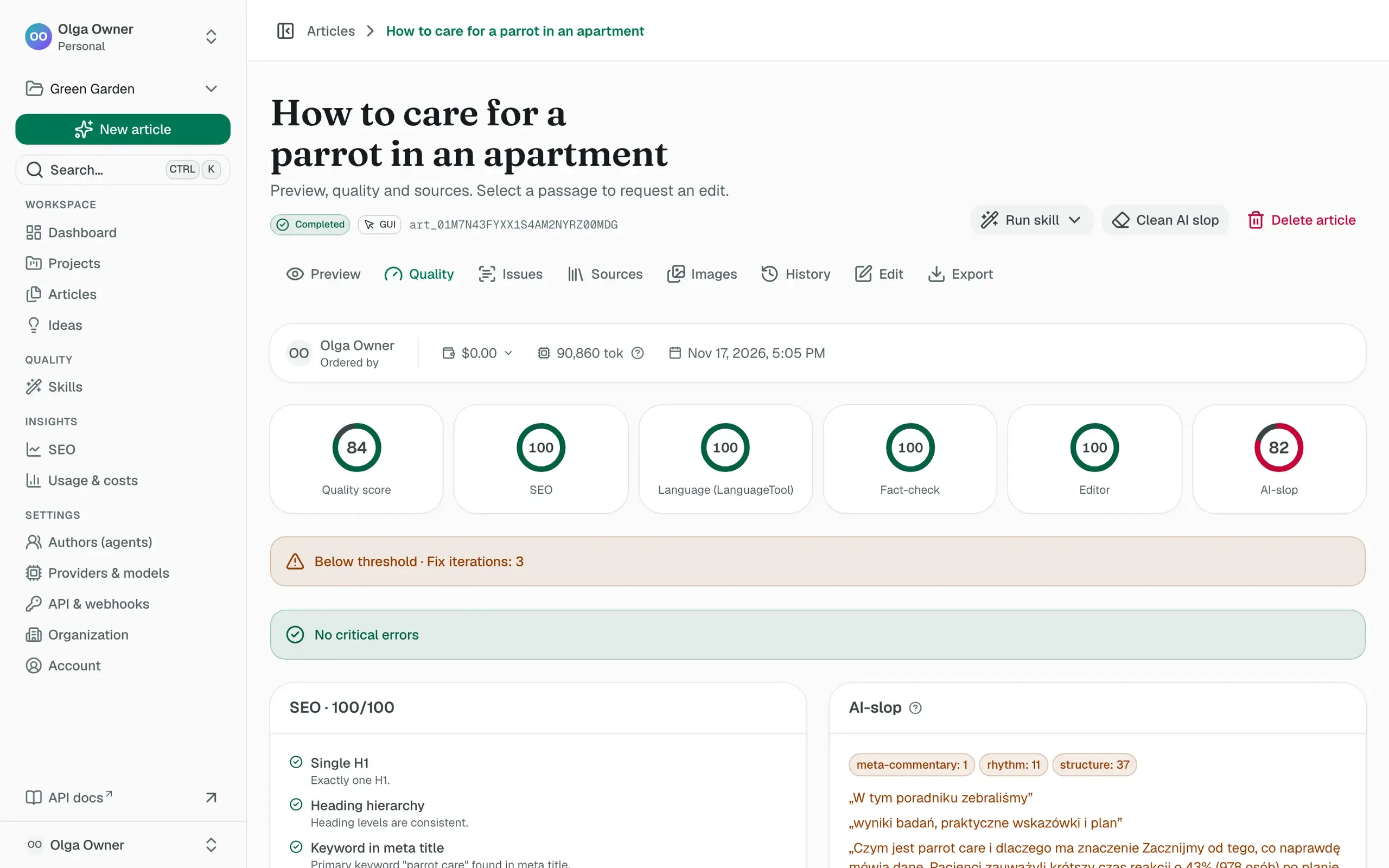
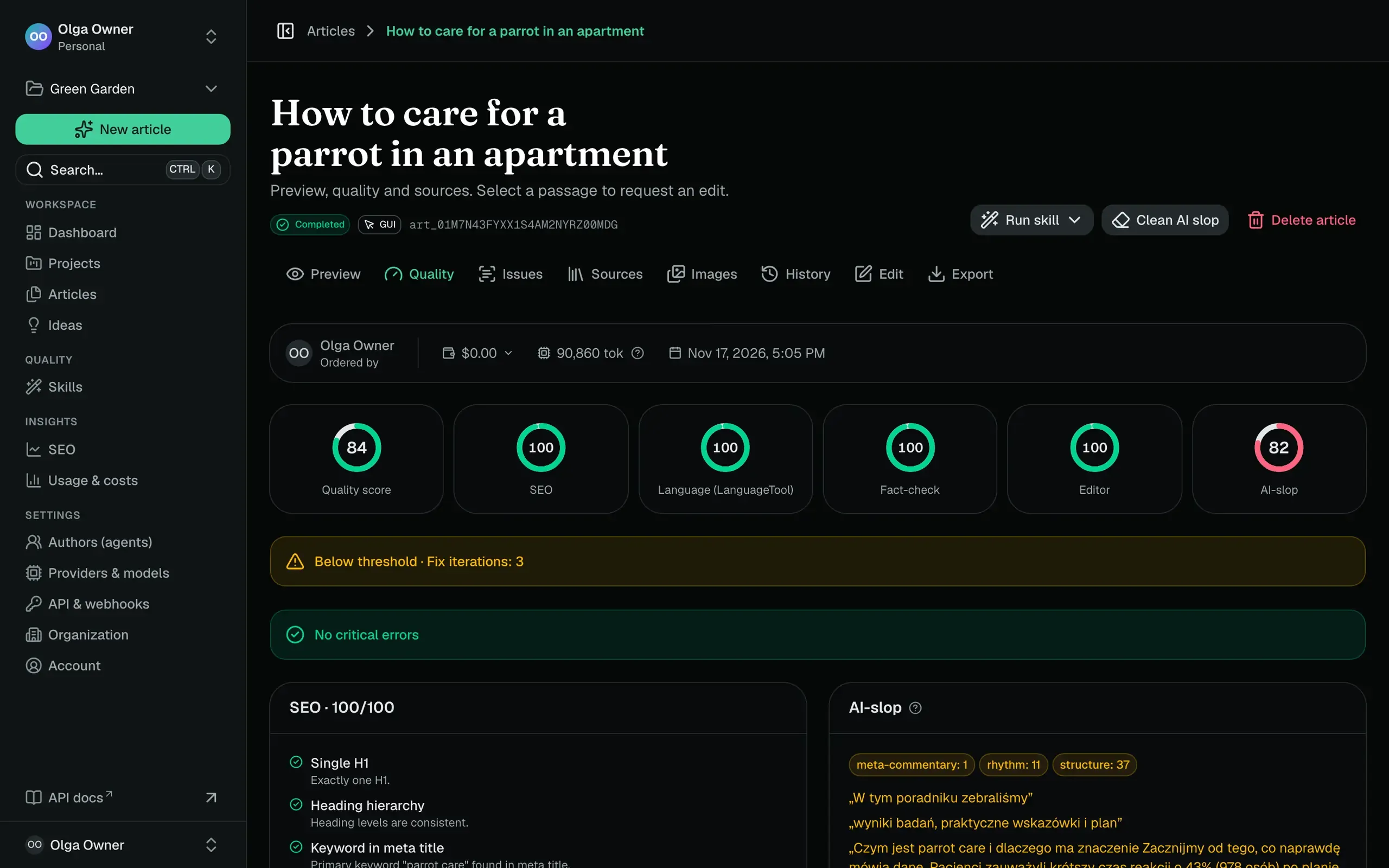
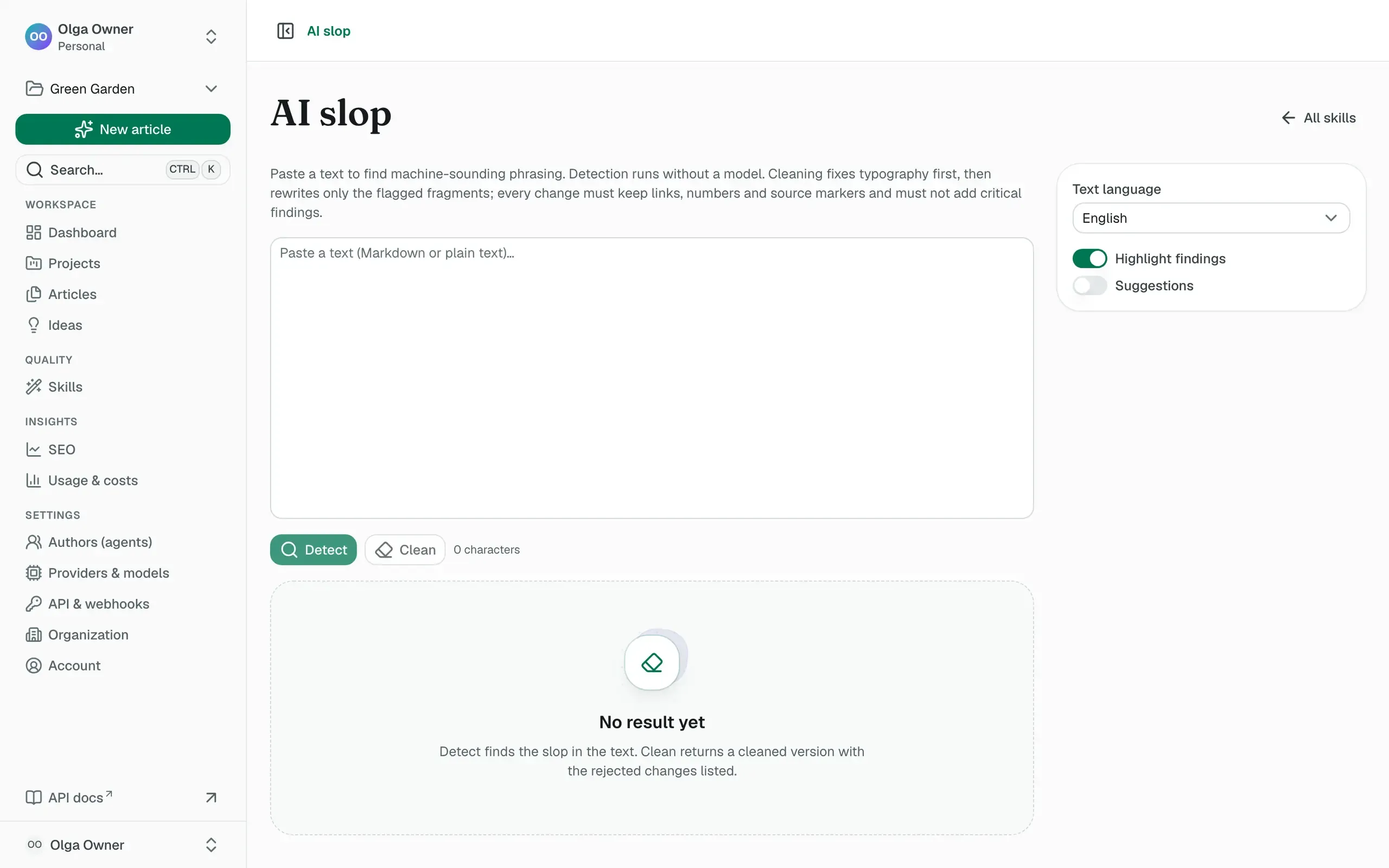
- Six-stage automated quality gate. Each draft passes through factual consistency checks, LanguageTool grammatical validation, AI-slop pattern detection, technical SEO compliance, readability scoring, and Vale style-guide enforcement.
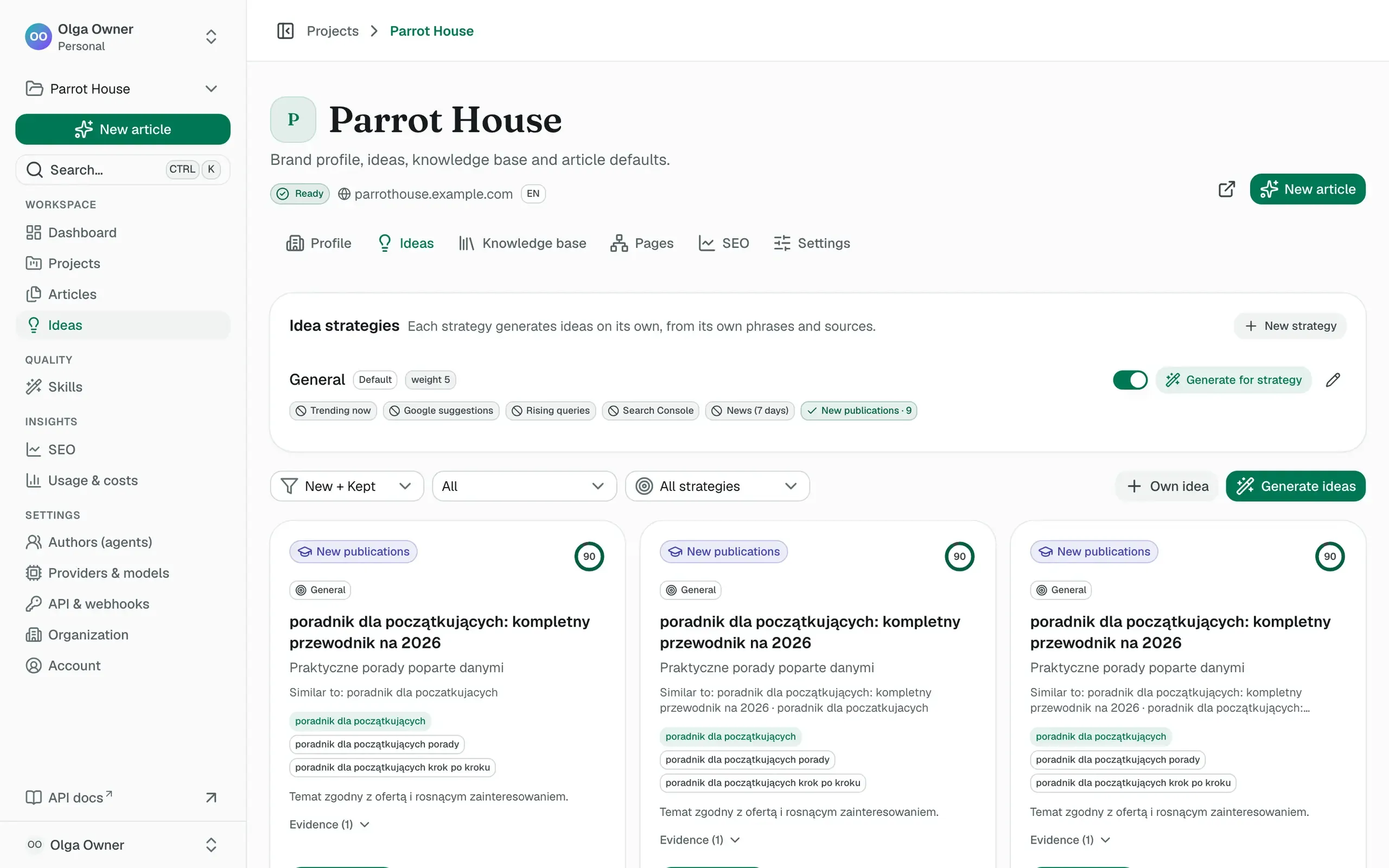
- Project and topic management. Domain analysis discovers topical content gaps, generates publication roadmaps, and localizes articles across target languages with synchronized hreflang tags.
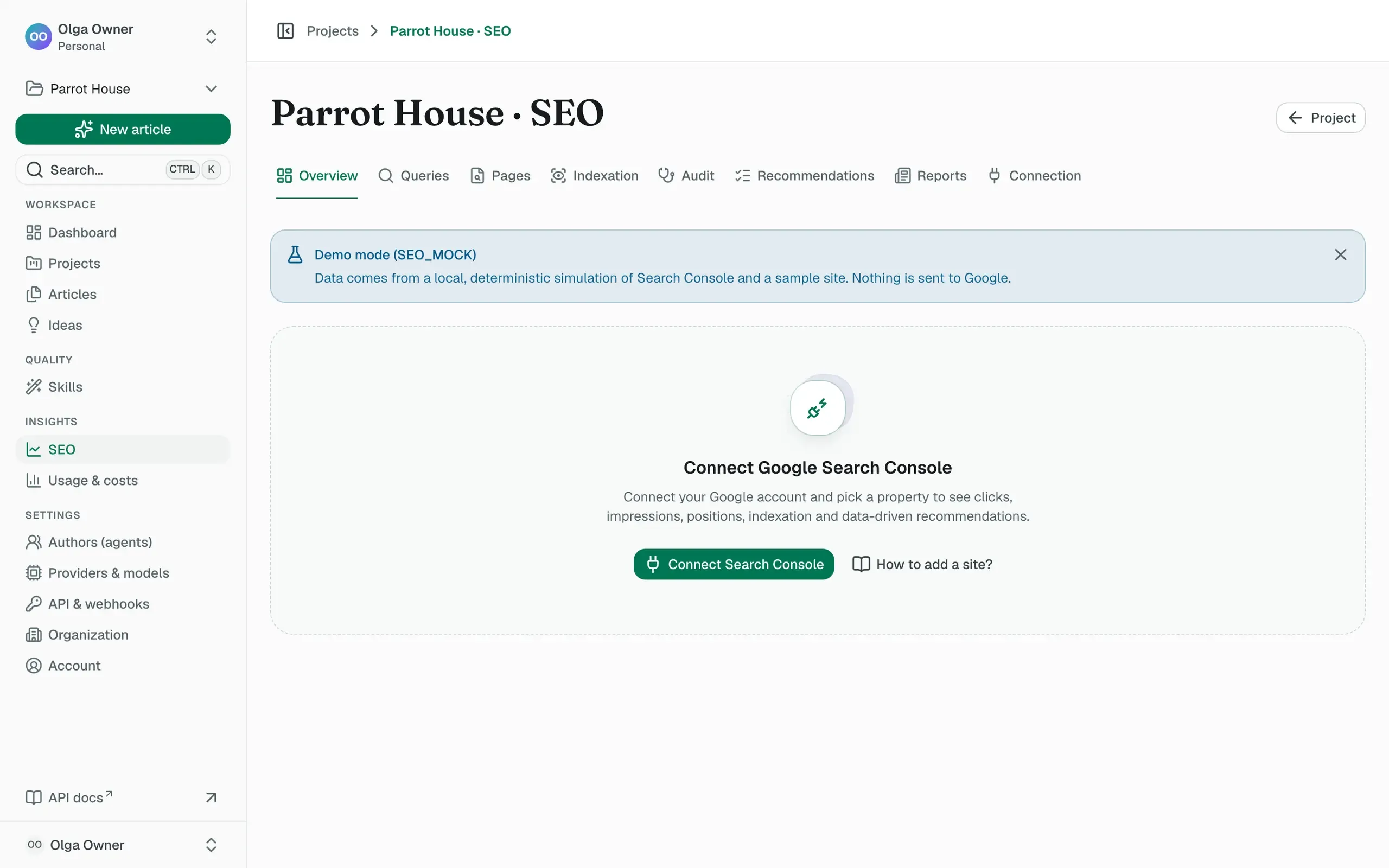
- Integrated SEO analytics. Google Search Console integration monitors indexation health, keyword rankings, and organic visibility trends.
- Team workspaces and integrations. Multi-tenant organizations with role-based access control, webhooks for headless CMS workflows, and a Model Context Protocol (MCP) server allowing AI agents to draft and retrieve articles programmatically.
Key architectural decisions
Strict grounding and hallucination mitigation. The writing engine synthesizes content exclusively from extracted paper abstracts and verified text excerpts rather than relying on ungrounded model weights. A dedicated post-generation validation pass compares each sentence against its cited source excerpt. Any assertion lacking explicit evidential support is automatically revised or discarded.
Automated quality gates with corrective loops. The outcomes of the six audit checks combine into a composite quality score (0–100). Drafts falling below a client-configured threshold are blocked from delivery and routed back into an automated revision loop with structured corrective instructions.
Asynchronous queues with automated model fallback. Article generation runs asynchronously on Redis-backed BullMQ queues. Each pipeline phase can target distinct LLM providers and enforce individual token budgets. If a provider encounters service degradation or rate limits, the queue dynamically switches to a designated fallback provider, ensuring uninterrupted pipeline execution.
Secure BYOK architecture. Organizations securely store API credentials for OpenAI, Anthropic, Google Gemini, OpenRouter, Moonshot, and compatible endpoints, as well as dedicated LanguageTool or Firecrawl instances. All credentials are encrypted at rest. Outgoing requests to public services use adaptive rate limiting to prevent quota exhaustion.
Multi-repository academic indexing. Source collection queries specialized scholarly indexes—including OpenAlex, Crossref, PubMed, Semantic Scholar, and CORE—alongside search APIs such as Tavily, Exa, and Brave.
Native multilingual generation. The generation pipeline supports 8 languages. Rather than applying mechanical machine translation to an English base draft, the engine generates culturally and idiomatically native prose with localized search intent and complete hreflang metadata.
Technology stack
| Component | Technologies |
|---|---|
| Dashboard | Nuxt 4, Vue 3, Nuxt UI |
| API Layer | Hono, documented with OpenAPI |
| Background Queues | BullMQ and Redis |
| Database & ORM | Drizzle ORM, SQLite / Cloudflare D1 |
| Monorepo & Codebase | TypeScript, pnpm, Turborepo |
| Quality & Testing | Over 1,500 Vitest tests and Playwright E2E suites |
Outcome
Editorial teams receive production-ready articles accompanied by itemized quality reports and scored citation lists. Reviewers can verify facts at a glance without independent research. Enterprise publishing teams automate content delivery directly into headless CMS platforms via webhooks and the REST API, keeping LLM operational costs completely transparent through the direct BYOK model.
What’s next
Roadmap priorities include expanding academic repository integrations, adding localized search engines, and extending programmatic SEO workflows. If you are designing an AI-driven platform or content pipeline, explore our approaches to AI integration and web applications.