

The story
Context
Zurich-based Wildbiene + Partner has promoted wild bee conservation for more than 13 years, cultivating an engaged European community of over 170,000 nature enthusiasts. The company distributes BeeHomes—specialized nesting boxes designed for solitary bees such as red mason bees, horned mason bees, and leafcutter bees. Unlike social honeybees, solitary bees nest individually inside hollow reeds, sealing each brood cell with natural materials before sealing the entrance. Because all activity happens inside the reed, owners historically saw only outer mud or leaf plugs without knowing which species inhabited their boxes.
The goal
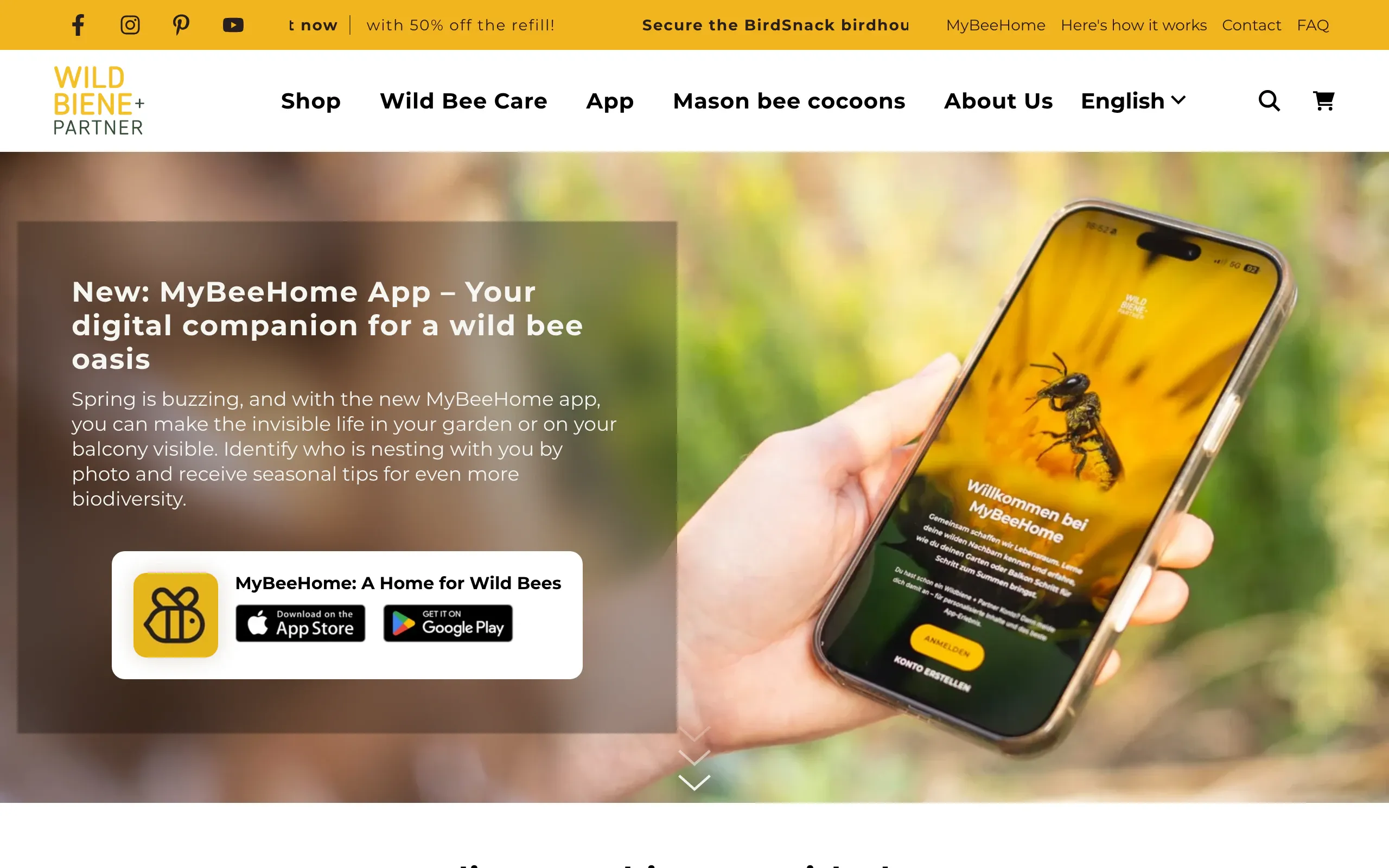
The client commissioned a mobile application to reveal the biodiversity inside each BeeHome. The app needed to classify nesting species from a smartphone camera photo, provide practical habitat advice for gardens, balconies, and windowsills, and encourage long-term conservation through local habitat and corridor mapping.
Smart Nest Detection: computer vision in practice
Automated nest recognition forms the technical core of the application. Solitary bee species utilize distinct materials to seal their nesting cavities: mason bees use damp clay and mud, leafcutter bees cut circular leaf fragments, and wool carder bees harvest dense plant fibers.
When a user snaps a photo of their BeeHome, the Smart Nest Detection pipeline:
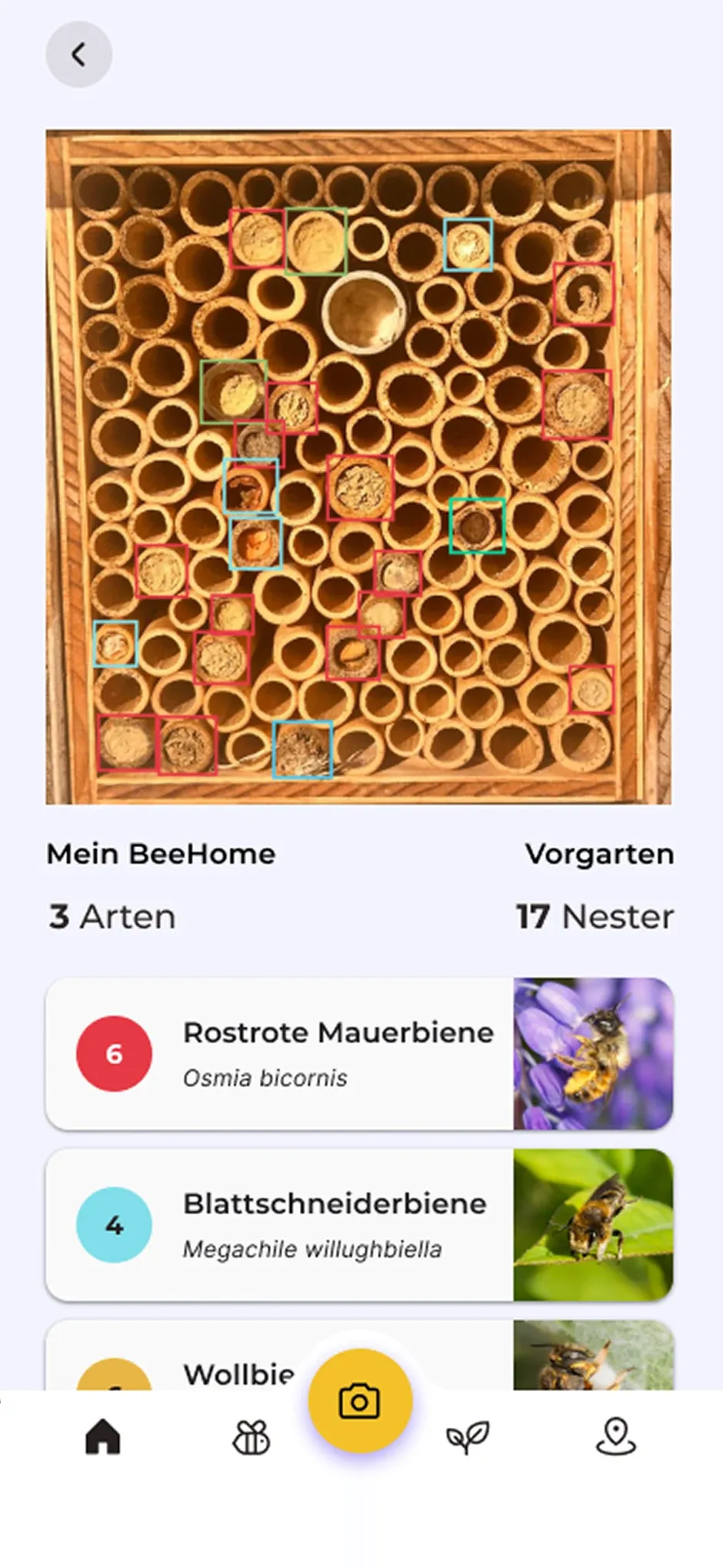
- Detects the circular tube matrix and identifies sealed nesting plugs across variable lighting conditions.
- Classifies each sealed tube into a specific species or taxonomic group (such as red mason bees, leafcutter bees, or resin bees).
- Overlays color-coded boundary markers on the photo to link visual tubes directly to species entries.
- Calculates aggregate biodiversity metrics (such as 3 species identified across 17 sealed nests).
- Logs the timestamped capture into the user’s seasonal diary to track colony development from spring emergence through autumn hibernation.
A critical engineering decision was transparent confidence handling. Rather than returning false positives when morphological signs are ambiguous, the classifier falls back to higher-level taxonomic groups. In-app capture guides assist users in maintaining proper focus, framing, and illumination before submitting the image.
Architectural and product decisions
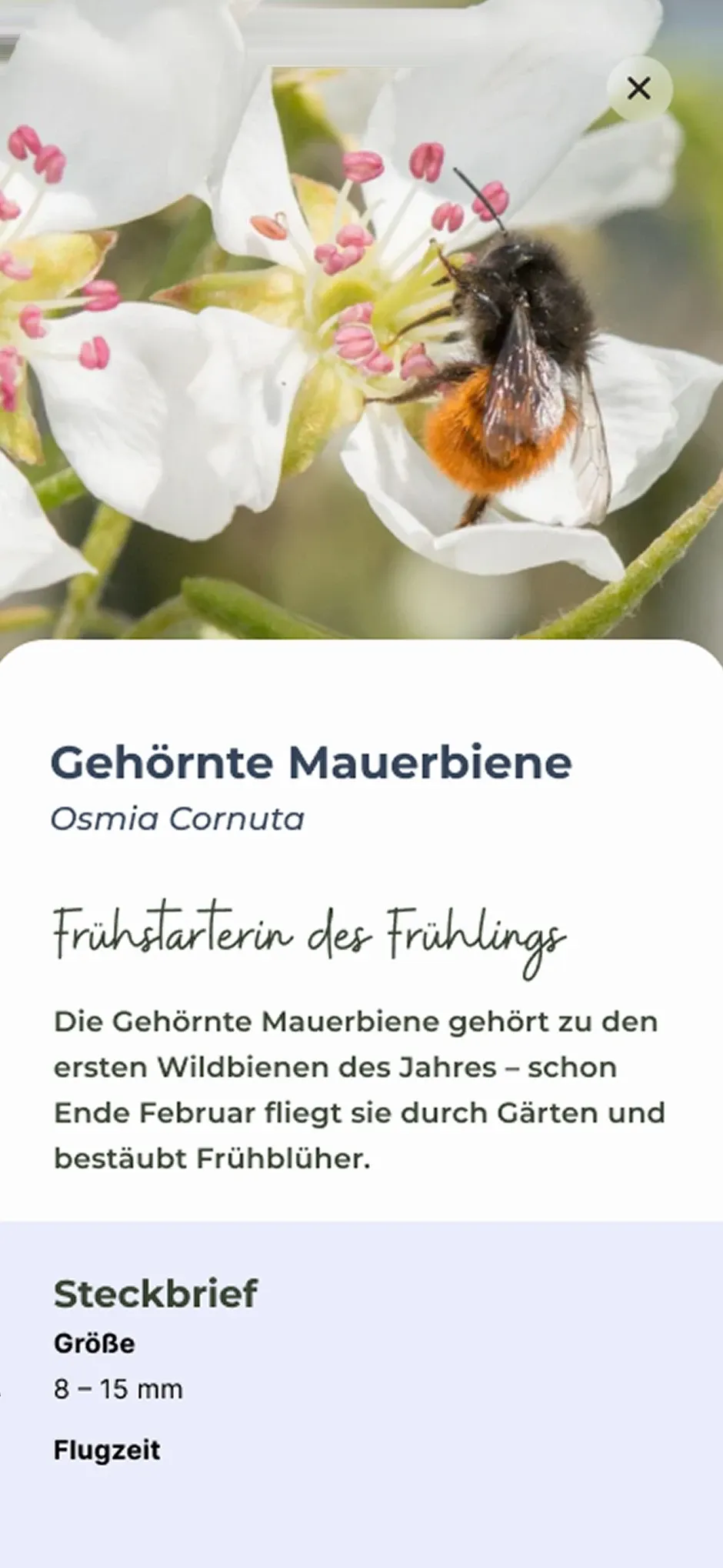
Accessible biodiversity data. Color-coded photo markers correlate directly with an illustrated species index, providing flight seasons, nesting preferences, and ecological foraging requirements without academic jargon.
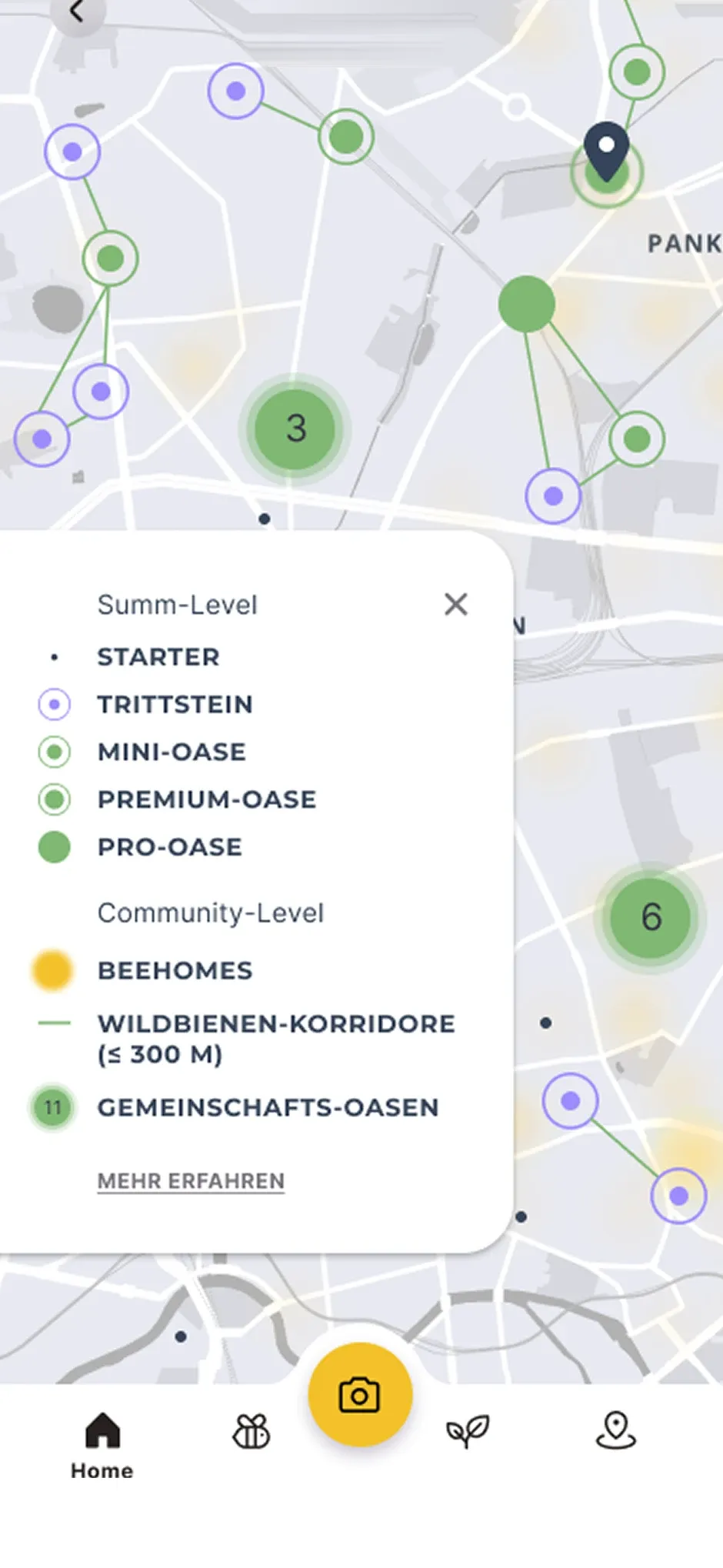
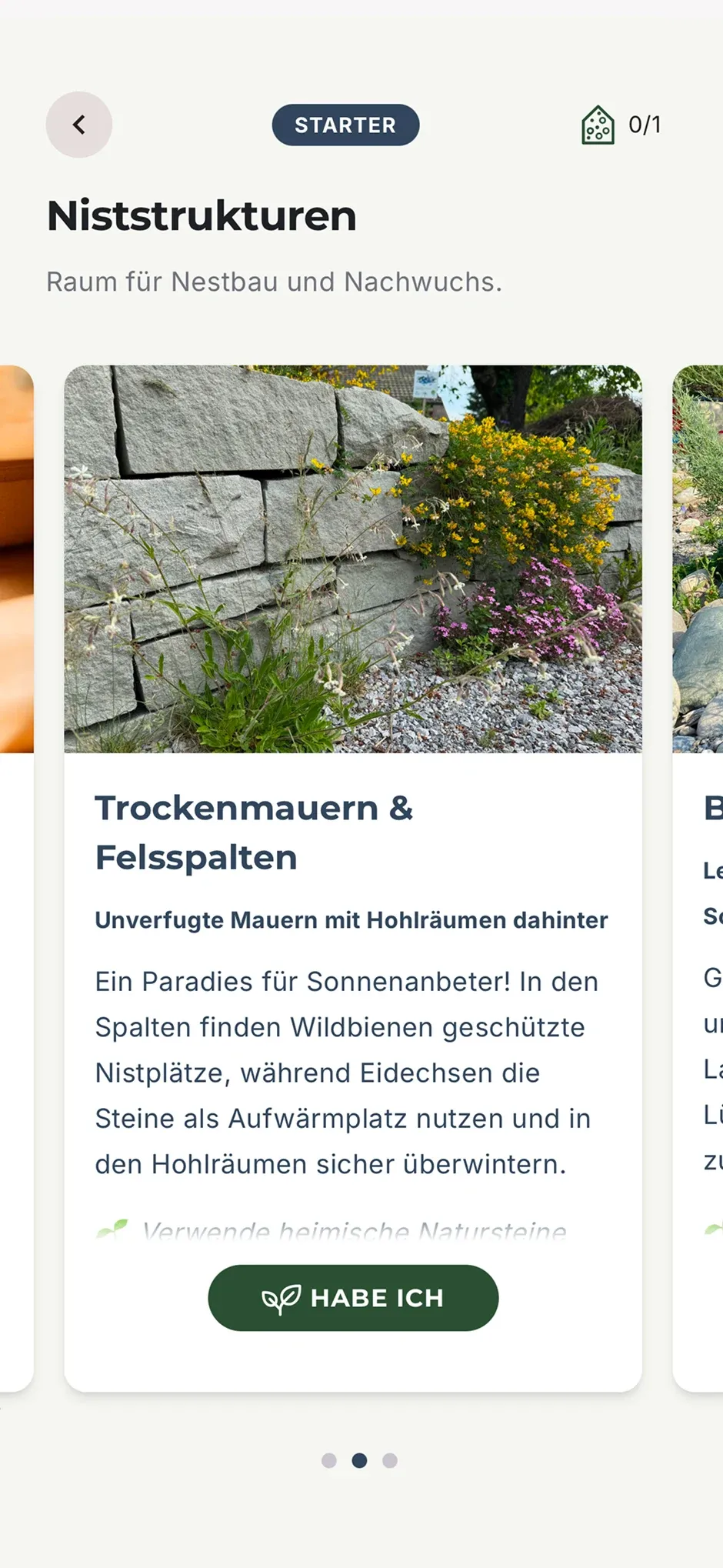
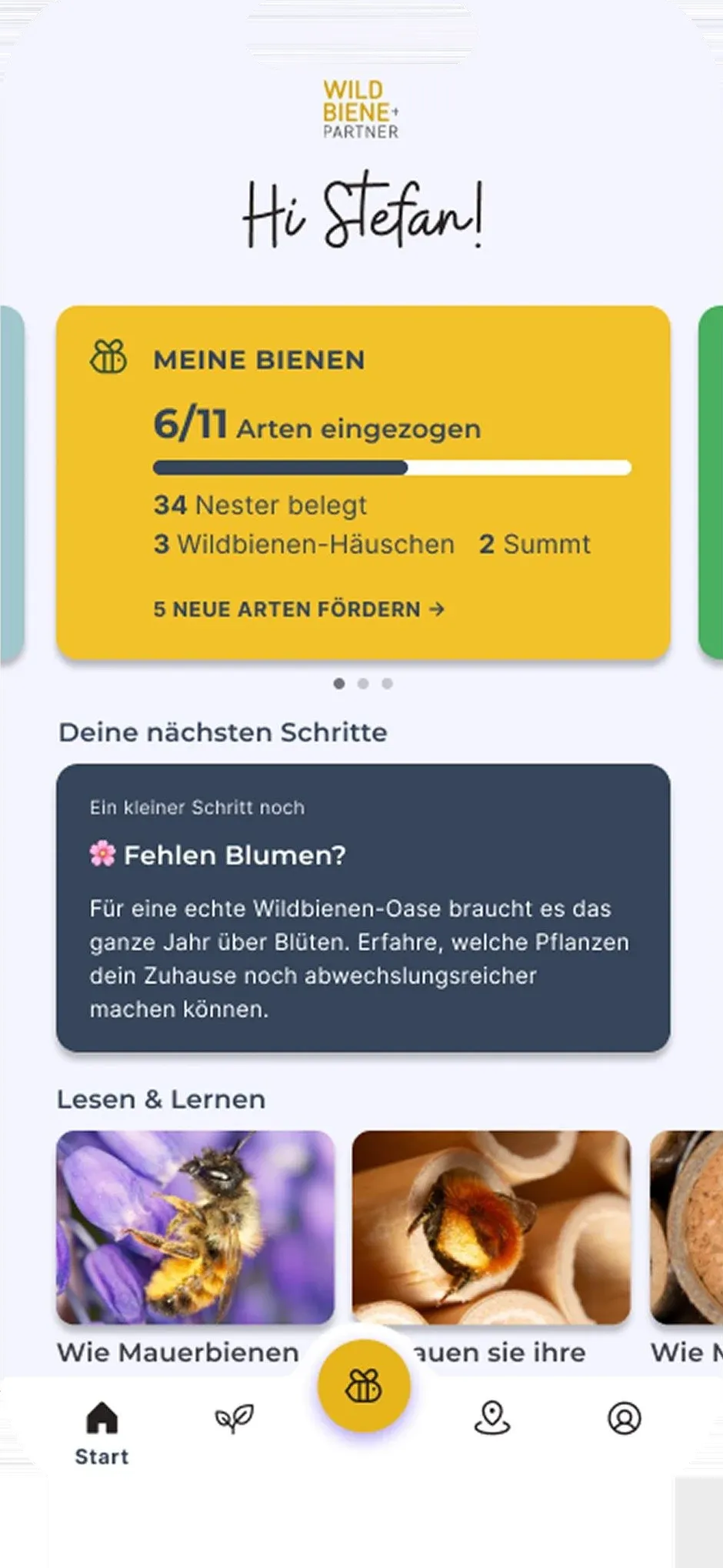
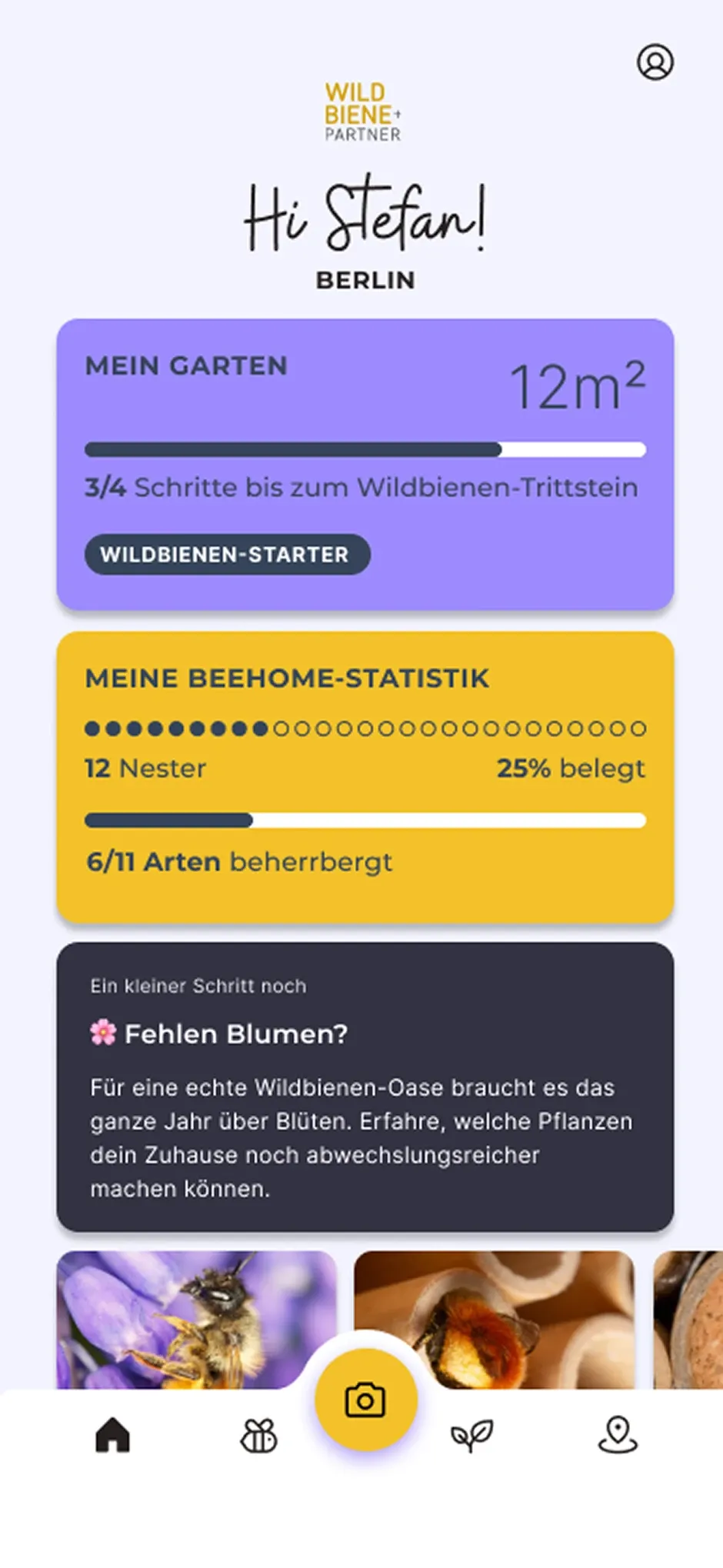
Sustained seasonal engagement. Solitary bees emerge in succession from March to September. A progressive milestone system (advancing from Starter through Stepping Stone to Pro-Oasis) alongside seasonal reminders keeps users engaged throughout the active nesting cycle.
Community corridor mapping. The interactive map displays registered BeeHomes, community-maintained floral oases, and calculated 300-metre foraging radii, enabling neighbours to bridge ecological gaps and connect local wild bee flight corridors.
Unified cross-platform stack. The application interface is built with Svelte for high-performance rendering and packaged for iOS and Android via Capacitor. Backend services and image handling run on Cloudflare’s serverless edge infrastructure.
Outcome
The app is published on the App Store and Google Play in German, French, and English, holding a 4.9/5 rating on the Swiss App Store across 146 verified reviews (as of November 2026). BeeHome owners can observe for the first time which species share their living spaces, while the Wildbiene + Partner team gains a scalable digital platform linking product sales with environmental education.
What’s next
Ongoing enhancements include expanded species classification models, multi-year nest comparison analytics, and enhanced habitat mapping tools. If you are developing an AI-driven mobile product or computer vision workflow, see our capabilities in mobile apps and AI integration.